


Yes, you can face a DUI charge in Arizona without ever turning the ignition or moving your vehicle. Under ARS § 28-1381, Arizona law prohibits not only driving while impaired but also being in “actual physical control” of a vehicle while under the influence. This means sitting in a parked car with keys nearby could be enough for arrest. If you were recently charged with a DUI without driving in Arizona, understanding this law is the first step toward protecting your rights, license, and future.
If you are facing a DUI charge and need guidance, Suzuki Law is ready to help. Call 602-682-5270 or reach out online to discuss your case today.
What “Actual Physical Control” Means Under Arizona DUI Laws
Arizona’s DUI statute goes beyond punishing people who drive drunk. Under ARS § 28-1381(A), it is unlawful for a person to drive or be in actual physical control of a vehicle while impaired. This language targets situations where someone could set a vehicle in motion at any moment.
There is no single definition of “actual physical control” written into the statute. Instead, courts examine the totality of circumstances, including where the vehicle was parked, whether the engine was running, where the keys were located, and where the driver was seated. A person asleep behind the wheel of a parked car with keys in the cup holder could face the same charges as someone pulled over on the highway.
💡 Pro Tip: If you find yourself impaired near your vehicle, where you place your keys matters. Keeping keys out of reach, such as in the trunk or outside the vehicle, may help demonstrate you were not exercising control over the car.
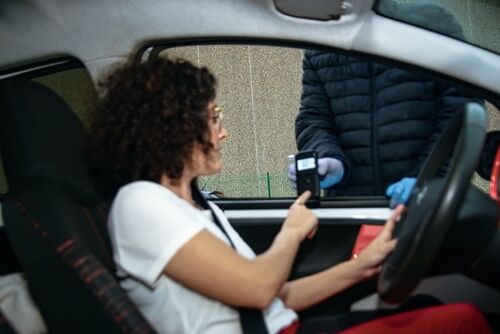
How Arizona Defines Impairment for a DUI in AZ
Arizona applies one of the strictest impairment standards in the country. Under ARS § 28-1381(A)(1), a person can be charged if they are impaired “to the slightest degree” by intoxicating liquor, any drug, a vapor releasing substance, or any combination thereof. Prosecutors do not need to show a specific BAC level to pursue charges under this subsection.
The statute also sets a per se BAC threshold. Under ARS § 28-1381(A)(2), a person may be charged with a BAC of 0.08 or more within two hours of driving or being in actual physical control, provided the alcohol concentration results from alcohol consumed before or while driving or being in actual physical control.
A first-offense DUI conviction under ARS § 28-1381 is a class 1 misdemeanor. It carries a statutory minimum of 10 consecutive days in jail, though a court may suspend all but one day if the defendant completes required alcohol or drug screening, education, and treatment programs. Fines, license suspension, ignition interlock device requirements, and other consequences also apply. Understanding what to do if stopped for a DUI can make a significant difference in your case outcome.
💡 Pro Tip: Arizona’s “impaired to the slightest degree” standard means that even if your BAC test comes back below 0.08, you could still face DUI charges based on officer observations and field sobriety test results. Challenge the evidence early with qualified legal counsel.
Extreme and Aggravated DUI Charges Also Apply to Physical Control
The actual physical control theory is not limited to standard DUI charges. Arizona’s extreme DUI statute, ARS § 28-1382, explicitly criminalizes both driving and being in actual physical control with a BAC of 0.15 or more. A BAC of 0.20 or more falls under the “super extreme” DUI tier with harsher penalties.
Aggravated DUI under ARS § 28-1383 follows the same framework. Five aggravating factors can elevate a DUI to felony status:
- Committing a DUI while your license is suspended, canceled, revoked, or refused due to a prior DUI-related violation
- A third or subsequent DUI offense within 84 months
- Having a passenger under 15 years old in the vehicle
- Violating an ignition interlock device requirement
- Wrong-way driving on a highway while under the influence
Penalties escalate significantly at the felony level. Under ARS § 28-1383(O), most aggravated DUI offenses are class 4 felonies, while a DUI with a passenger under 15 is a class 6 felony. A felony conviction can result in prison time, loss of civil rights, and long-term record damage.
| DUI Level | Statute | BAC Threshold | Classification |
|---|---|---|---|
| Standard DUI | ARS § 28-1381 | 0.08+ or impaired to the slightest degree | Class 1 misdemeanor |
| Extreme DUI | ARS § 28-1382 | 0.15+ (super extreme at 0.20+) | Class 1 misdemeanor (enhanced penalties) |
| Aggravated DUI | ARS § 28-1383 | Varies by aggravating factor | Class 4 or Class 6 felony |

The Shelter Rule: A Key DUI Defense in Tucson, AZ
Arizona recognizes a defense known as the “Shelter Rule” that may apply when a person was not actually driving. This defense allows a driver to argue they were merely using their car as shelter to sleep off impairment rather than exercising control over the vehicle.
The legal test asks whether the person posed a threat through present or imminent control of the vehicle. Courts have examined this question in cases such as State v. Love, 897 P.2d 626 (Ariz. 1995) and State v. Tarr, 331 P.3d 423 (Ariz. Ct. App. 2014). The inquiry focuses on whether the individual was genuinely using the vehicle to rest or whether they could have readily set it in motion.
Factors Courts May Consider for the Shelter Rule
No single factor is dispositive, and courts weigh circumstances as a whole. Evidence supporting a Shelter Rule defense includes the engine being off, the driver reclined in the back seat, or keys stored away from the ignition. Conversely, being in the driver’s seat with the engine idling may weigh against this defense.
💡 Pro Tip: If you decide to sleep in your car after drinking, take steps that support a Shelter Rule defense: move to the back seat, turn the engine completely off, and place keys somewhere other than the ignition or your pocket.

What Prosecutors Must Prove in an Actual Physical Control DUI Case
To secure a DUI conviction in Arizona, prosecutors must prove two elements. First, the driver was under the influence of alcohol, drugs, or other impairing substances. Second, the person was driving or in actual physical control of a vehicle. Both elements must be established beyond a reasonable doubt.
Challenging either element can form the basis of an effective defense strategy. For the impairment element, a DUI defense attorney in Tucson may challenge breath or blood test accuracy, question testing equipment calibration, or scrutinize the chain of custody for blood samples. For the physical control element, the defense may present evidence about the vehicle’s location, key position, and the driver’s intent.
Challenging the Evidence
BAC testing reliability is not absolute, and procedural errors can affect results. Issues such as improper field sobriety test administration, failure to observe the required waiting period before a breath test, or blood sample contamination may provide grounds to challenge the prosecution’s case. Administrative deadlines, including the 15-day window to request an MVD hearing, add urgency to building a defense.
💡 Pro Tip: Arizona’s administrative license suspension process runs on a separate track from your criminal case. Missing the 15-day deadline to request a hearing with the MVD can result in an automatic suspension, so act quickly after an arrest.

Why You Need a DUI Lawyer in Tucson After an Actual Physical Control Charge
An actual physical control DUI charge requires a defense strategy tailored to your specific facts. Unlike a typical traffic-stop DUI, the prosecution must establish that you were exercising or could have exercised control over your vehicle. This creates unique opportunities to challenge the charges but requires an attorney with extensive Arizona DUI law experience.
Time-sensitive deadlines make prompt legal action critical. From requesting an MVD hearing to preserving evidence such as surveillance footage or witness statements, delays can limit your options. Whether facing a misdemeanor or felony DUI charge, the consequences to your driving privileges, employment, and record demand a thorough and timely response.

Frequently Asked Questions
1. Can I get a DUI charge for sleeping in a parked car in Arizona?
Yes. Under Arizona’s DUI statutes, being in actual physical control of a vehicle while impaired is treated the same as driving while impaired. If law enforcement finds you asleep in your vehicle with access to keys, you may face DUI charges. However, the Shelter Rule defense may apply depending on circumstances.
2. What is the “impaired to the slightest degree” standard?
Arizona uses this standard under ARS § 28-1381(A)(1) to allow DUI charges even when a person’s BAC is below 0.08. If an officer observes signs of impairment from alcohol, drugs, or other substances, that may be sufficient to support a charge regardless of BAC reading.
3. What makes a DUI an aggravated felony in Arizona?
Under ARS § 28-1383, a DUI becomes aggravated based on five factors: committing a DUI while your license is suspended due to a DUI-related violation; committing a third or subsequent DUI within 84 months; having a passenger under 15 in the vehicle; violating ignition interlock requirements; or wrong-way driving on a highway while impaired. Most aggravated DUI offenses are class 4 felonies.
4. How does the Shelter Rule work as a DUI defense?
The Shelter Rule allows a person to argue they were using their vehicle as a safe place to rest rather than exercising control over it. Courts evaluate factors such as whether the engine was running, where keys were located, and the driver’s position in the vehicle. This defense is fact-dependent.
5. What should I do immediately after an actual physical control DUI arrest in Tucson?
Request an MVD hearing within 15 days to protect your driving privileges, avoid making statements to law enforcement beyond identifying information, and contact a Tucson DUI attorney as soon as possible. Preserving evidence and meeting administrative deadlines are critical first steps.
💡 Pro Tip: Write down everything you remember about your arrest circumstances as soon as possible, including where your keys were, whether the engine was running, and your position in the vehicle. These details can be essential to an actual physical control defense.
Protect Your Rights After a DUI Charge in Tucson
A DUI charge based on actual physical control can feel overwhelming, especially when you were not even driving. Arizona law treats physical control the same as driving, which means the stakes are equally high. Understanding the Shelter Rule, impairment standards, and the evidence prosecutors must prove gives you a foundation to fight back. A strong defense starts with understanding your rights and acting quickly.
If you are facing a DUI without driving charge or any DUI accusation in Arizona, Suzuki Law can help you evaluate your options and build a defense. Call 602-682-5270 or contact us today to schedule a consultation.
Call or text (602) 682-5270 or complete a Free Case Evaluation form