

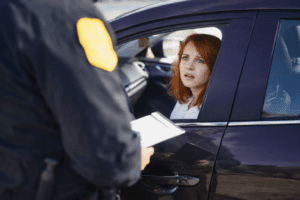
Getting pulled over for a DUI in Tucson can be one of the most stressful experiences of your life. The flashing lights in your rearview mirror, the anxiety of speaking with law enforcement, and the uncertainty of what comes next can cloud your judgment when you need clarity most. At Suzuki Law, we’ve seen countless cases where good people made critical errors during their DUI arrests that significantly damaged their defense options.
Over the years, we’ve witnessed how the mistakes Tucson residents make during traffic stops can transform what might have been a defendable case into an uphill battle. Lead attorney Richard Suzuki, recognized as a National Trial Lawyers Top 40 Under 40 selection, has built our firm’s reputation on understanding exactly where these mistakes happen and how to address them strategically.
From traffic stops along Speedway Boulevard to arrests throughout Pima County, we’ve seen the same patterns emerge. The Tucson Police Department follows specific protocols during DUI investigations, and understanding these procedures is crucial to protecting your rights. Unfortunately, most people don’t know what they should or shouldn’t do during these high-pressure situations.
The mistakes we’ll discuss in this article aren’t just theoretical problems. They’re real errors that have real consequences for real people facing DUI charges in Tucson. Each mistake can provide prosecutors with additional ammunition against you and limit your attorney’s ability to build an effective defense.
Mistake #1: Voluntarily Participating in Field Sobriety Tests
One of the most significant mistakes we encounter involves field sobriety tests. Many people don’t realize that in Arizona, you have the right to refuse these tests. Field sobriety tests are subjective evaluations that even sober individuals can fail under the right circumstances.
The Tucson Police Department commonly administers three standardized field sobriety tests: the horizontal gaze nystagmus test, the walk-and-turn test, and the one-leg stand test. Each of these has specific criteria that officers use to determine impairment, but various factors can affect your performance.
Physical conditions, medical issues, age, weight, and even the surface you’re standing on can all impact your ability to perform these tests successfully. We’ve represented clients with inner ear problems, back injuries, and other medical conditions that made it impossible for them to pass field sobriety tests regardless of their sobriety level.
Weather conditions in Tucson can also affect test performance. Performing balance tests on uneven pavement or in windy conditions isn’t fair, but officers often administer tests under these circumstances anyway. The parking lot of a convenience store or the shoulder of a busy road doesn’t provide ideal testing conditions.
| Common Field Sobriety Test Issues | Impact on Your Case |
|---|---|
| Medical conditions affecting balance | Can invalidate test results |
| Uneven or slippery surfaces | Creates unreliable testing conditions |
| Poor lighting conditions | Affects officer’s ability to properly observe |
| Distracting traffic or noise | Impacts concentration and performance |
The key point many people miss is that declining these tests is within your rights. While officers may suggest that refusing tests will hurt your case, this isn’t necessarily true. Your refusal cannot be used as direct evidence of guilt, and avoiding potentially failed tests can actually strengthen your defense position.
Mistake #2: Making Incriminating Statements During the Traffic Stop
We cannot stress this enough: anything you say during a DUI stop can and will be used against you in court. Yet we consistently see cases where clients made statements that severely damaged their defense.
Common incriminating statements include admitting to drinking, even small amounts. Saying “I only had two beers” or “I had a glass of wine with dinner” provides prosecutors with direct evidence of alcohol consumption. You might think honesty will help your situation, but these admissions typically work against you.
Another frequent mistake involves explaining why you were driving erratically. Statements like “I was tired” or “I was texting” can provide alternative explanations for poor driving, but they also confirm that you were operating a vehicle while impaired in some way.
Many people also make the mistake of answering detailed questions about their evening. Officers often ask where you’ve been, who you were with, and what you consumed. These questions aren’t casual conversation — they’re part of the DUI investigation designed to gather evidence against you.
Here are the types of questions you should avoid answering in detail:
“How much have you had to drink tonight?”
“Where are you coming from?”
“What time did you start drinking?”
“When was your last drink?”
“Are you on any medications?”
“Do you feel intoxicated?”
The appropriate response to these questions is to politely invoke your right to remain silent. You can say something like, “I’m exercising my right to remain silent and would like to speak with my attorney.” This isn’t an admission of guilt — it’s a smart legal strategy.
Mistake #3: Consenting to Vehicle Searches
Another critical error involves consenting to vehicle searches. When officers ask “Do you mind if we search your car?”, many people assume they have to agree. This assumption can lead to additional charges beyond the DUI.
Vehicle searches can uncover various items that complicate your case. Open containers, prescription medications without proper labels, or other substances can result in additional charges. Even legal items can sometimes be misinterpreted or used to suggest impairment.
The Fourth Amendment protects you against unreasonable searches. Officers need either your consent, a warrant, or probable cause to search your vehicle. If they had sufficient probable cause, they wouldn’t need to ask for your permission.
We’ve seen cases where vehicle searches revealed prescription medications that clients had forgotten about. Even legally prescribed medications can lead to additional DUI charges if officers believe they contributed to impairment. Other times, searches have uncovered items belonging to passengers that resulted in additional complications.
| Search Scenario | Potential Consequences |
|---|---|
| Open containers found | Additional charges and enhanced penalties |
| Prescription drugs discovered | Possible drug DUI charges |
| Paraphernalia located | Additional criminal charges |
| Large amounts of cash | Potential asset forfeiture issues |
The safest approach is to politely decline search requests. You can say, “I don’t consent to any searches.” If officers proceed anyway, don’t physically resist, but make sure to verbally state that you don’t consent. This preserves your rights for later legal challenges.

Mistake #4: Refusing Chemical Tests Without Understanding the Consequences
Arizona’s implied consent law creates a complex situation regarding chemical tests. While you can refuse blood or breath tests, doing so triggers automatic license suspension and can be used as evidence against you in court. Understanding these consequences is crucial for making informed decisions.
Many people confuse field sobriety tests with chemical tests. These are entirely different situations with different legal implications. Chemical tests measure blood alcohol content directly, while field sobriety tests are subjective observations of physical coordination.
A common error is refusing chemical tests without understanding the full scope of consequences. Administrative license suspension occurs immediately upon refusal, separate from any criminal proceedings. This means you could lose your driving privileges even if you’re ultimately not convicted of DUI. Cases like botched blood draws do happen, and they can create real defense opportunities — but only if a test was actually taken.
However, refusal isn’t always the wrong choice. In some cases, refusing chemical tests can be strategically advantageous, especially if you believe your blood alcohol content is significantly above the legal limit. The decision requires careful consideration of your specific circumstances.
Factors to consider include your prior DUI history, your estimated blood alcohol level, and your need for driving privileges. First-time offenders face different consequences than repeat offenders. Someone whose livelihood depends on driving might make different choices than someone with alternative transportation options.
We always recommend requesting to speak with an attorney before making this crucial decision. While officers might suggest you don’t have time for legal consultation, Arizona law provides a reasonable opportunity to contact counsel regarding chemical test decisions.

Mistake #5: Not Requesting Legal Representation Immediately
One of the most significant mistakes Tucson residents make after a DUI stop is failing to request legal representation immediately. Many people think they should wait to see what happens or try to handle the situation themselves initially. This approach often backfires dramatically.
The earlier we get involved in your case, the more options we typically have for building your defense. Evidence can disappear, witness memories can fade, and crucial deadlines can pass while you’re deciding whether you need legal help.
Arizona law provides you the right to contact an attorney, but this right isn’t automatic. You must clearly request legal representation. Simply thinking about calling a lawyer isn’t enough—you need to verbally state your request to officers.
Some people worry that requesting an attorney makes them look guilty. This concern is understandable but misguided. Exercising your constitutional rights is a smart legal strategy, not an admission of wrongdoing. Prosecutors and judges expect people to obtain legal representation for serious charges like DUI.
The booking process includes various deadlines and procedures that can affect your case. Administrative license suspension hearings must be requested within specific timeframes. Missing these deadlines can result in automatic license suspension regardless of your criminal case outcome.
Our experience with Tucson Police Department protocols and local court procedures allows us to identify problems early and address them proactively. We know which officers tend to make procedural errors and which judges focus on specific aspects of DUI cases.

Mistake #6: Discussing Your Case on Social Media or With Others
The final major mistake involves discussing your DUI case publicly. Social media posts, conversations with friends, and even family discussions can potentially damage your defense. We live in an era where information spreads quickly, and prosecutors have become increasingly sophisticated about gathering evidence from digital sources—as cases likethis one involving a drunk driving Facebook post illustrate all too clearly.
Social media posts about your case, your drinking habits, or even your general activities can be screenshot and preserved as evidence. Photos of you drinking, even from weeks before your arrest, might be used to establish patterns of behavior. Comments about the arrest, complaints about officers, or statements about your innocence can all be taken out of context.
We’ve seen cases where clients posted bail and immediately went to social media to vent their frustrations. These emotional posts often contain admissions or statements that prosecutors later use against them. The temporary relief of sharing your story publicly can create permanent damage to your legal defense.
Beyond social media, casual conversations with friends, coworkers, or family members can also create problems. Well-meaning people sometimes repeat conversations to others, and information can eventually reach prosecutors or law enforcement. Even conversations with people you trust can become evidence if those individuals are called as witnesses.
The general rule we recommend to all clients is simple: don’t discuss your case with anyone except your attorney. Attorney-client privilege protects our conversations, but no similar protection exists for discussions with friends, family members, or social media followers.
- Avoid posting on social media about your case
- Don’t discuss details with coworkers or acquaintances
- Be careful about family conversations that might be overheard
- Don’t post photos or comments about drinking or partying
- Avoid checking in at bars or alcohol-related venues
- Don’t respond to online comments about your case

How Suzuki Law Addresses These Common Mistakes
At Suzuki Law, our extensive experience defending DUI cases throughout Pima County has taught us how to transform these common mistakes into defendable positions. Richard Suzuki’s recognition as a National Trial Lawyers Top 40 Under 40 attorney reflects our commitment to innovative defense strategies that address post-arrest errors.
Our membership in both the Arizona Trial Lawyers Association and National Association of Criminal Defense Lawyers keeps us current on evolving DUI defense strategies. We understand how Tucson courts operate and what prosecutors typically focus on when building their cases.
When clients come to us after making some of these mistakes, we don’t view their cases as hopeless. Instead, we analyze exactly what happened, identify where procedures might have been violated, and develop strategic responses accordingly.
As former prosecutors, we know exactly how the state builds DUI cases, which means we also know where they tend to fall apart. Our network of expert witnesses and investigators helps us challenge evidence that might initially appear damaging.
Our bilingual capabilities ensure that both English and Spanish-speaking clients receive comprehensive guidance on avoiding these critical errors. We understand that cultural and language barriers can sometimes contribute to misunderstandings during DUI arrests.
Protecting Your Rights During Future Encounters
Understanding these six critical mistakes can help protect you during any future encounters with law enforcement. Knowledge of your rights and appropriate responses can make the difference between a case that’s difficult to defend and one with multiple viable defense options.
Remember that exercising your rights is a smart legal strategy. Officers are trained to gather evidence against you, and everything you say or do during a DUI investigation can potentially be used in court. The key is remaining calm, being respectful, and clearly stating your intention to exercise your rights.
You don’t need to be confrontational or argumentative. Simply say that you’re exercising your right to remain silent and would like to speak with an attorney.
Get Expert Legal Help for Your Tucson DUI Case
If you’ve been arrested for DUI in Tucson, time is critical. The mistakes discussed in this article can significantly impact your case, but experienced legal representation can help address these issues strategically. At Suzuki Law, we understand exactly how these common errors affect DUI cases and how to build effective defenses despite initial missteps.
Don’t let arrest-time mistakes determine the outcome of your case. Our extensive experience with Tucson Police Department protocols and local court procedures positions us to identify problems and develop solutions that protect your rights and your future. It’s also worth understanding the full costs a DUI conviction can carry—beyond fines and jail time, the consequences reach further than most people expect.
Contact Suzuki Law for your free consultation to discuss how we can help address any mistakes made during your DUI arrest and build the strongest possible defense for your case.
Call or text (602) 682-5270 or complete a Free Case Evaluation form